
- Home
- Industries
- Desalination
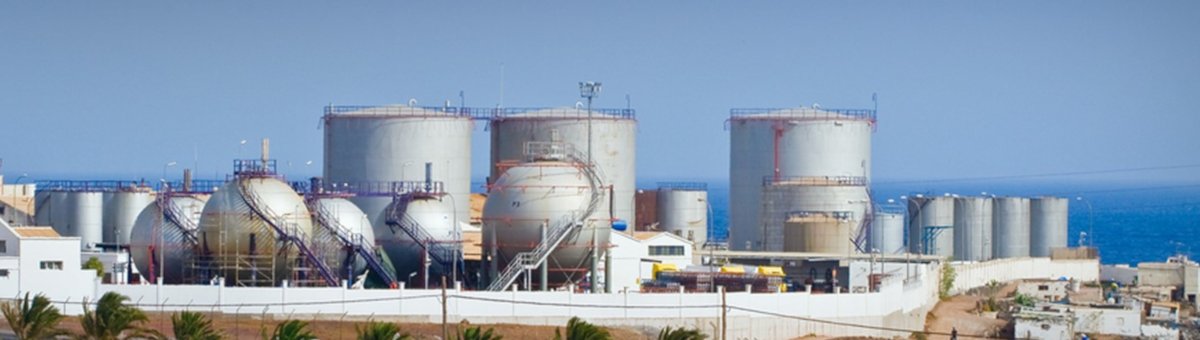
DESALINATION - CO2 IS IMPORTANT WHEN MAKING CLEAN AND SAFE DRINKING WATER
Safe drinking water has become a matter of global concern. It impacts everything – health, poverty, and growth. Desalination plants signify a solution to this matter, as they can create safe drinking water from sea/brackish water by thermal evaporation/distillation or reverse osmosis processes.
CO2 is generated on-site to ensure food-grade and reliable supply of CO2 for the re-mineralization process making the distillate suitable for drinking water.
The CO2 plants are customized to meet the highest quality demands, as well as the international standards applicable for water and power plants.
-
BEST AVAILABLE CO2 PLANTS
-
Designed to cope with the strictest needs and requirements
It would be difficult to overstate the importance of innovation and quality at Union Engineering. Both things keep pushing our expertise further and make us live up to needs and requirements around the globe.Our CO2 generating plants within the desalination industry provide you with:
- Quality and Reliability - equipment from first-class suppliers and redundant design provide maximum uptime.
- High Performance - cost-effective solutions e.g. NoxFlash delivers minimum lifetime operating costs.
- Customized designs - meeting customer-specific demands and regulatory requirements.
- Environmental procured - equipment, materials, and corrosion protection for marine and salty atmosphere.
-
TECHNOLOGICAL ADVANTAGES
-
Ensured performance from project phase to hand-over to customer
CO2 generating plants (CBU) are based on the combustion of fossil fuels such as diesel oil, heavy fuel oil, kerosene, natural gas, LPG, or LNG.Through combustion, scrubbing, absorption, stripping, adsorption, and separation technology, the CO2 generating plants meet the strictest CO2 quality requirements regardless of the fuel type.
RESULT-DRIVEN TECHNOLOGY – NOXFLASH AND PUR-D
All Pentair Union Engineering generating plants are based on amine plants, including NOxFlash and PUR-D.
The NOxFlash technology is the result of innovation and research and has been proven in our installations since 2006. The NOxFlash technology brings NOx levels to food-grade purity and:
- Replaces the traditional use of scrubbing with PPM (potassium permanganate) solution, reducing cost and environmental impact.
- Acts as proven abatement of benzene (aromatic hydrocarbons) in the final product.
The PUR-D technology is the final purification step, consisting of a distillation column, obtaining CO2 purity of min. 99.99% (v/v).
All plants are designed for high efficiency and reliability through components selected for 24/7 operation.
-
MEETING PROJECT NEED
-
Ensured performance from project phase to hand-over to customer
The result is what matters. But it requires expertise and exact preparation to get there. At Union Engineering every step is supported by innovative technology and a team of project engineers with years of experience in handling the challenges of desalination:- Project management through the project phases from design and manufacturing to implementation of the CO2 plant is finally accepted by the client.
- Documentation - Inspection and Test Plans, hazop, quality dossiers, and certificates to meet regulatory requirements.
- On-site installation and performance testing to verify that the CO2 plants are operating in accordance with the specifications.
RELATED SOLUTIONS
Self-Generating Plants (CBU) - for CO2 self-sufficiency
Combustion-based generating plants are designed to enable decentralized production of CO2 from flue gas.
Advanced Amine Technology (AAT) - for capturing CO2 from flue gas
Low-purity CO2 raw gas is sourced from the combustion of fossil fuel, lime, or cement kilns and requires an upgrading unit to make it feasible for use in a CO2 liquefaction unit.
Extraction Plants (EBU) - for CO2 self-sufficiency with existing flue gas source
Capture CO2 from boiler flue gas, whether fired with diesel, heavy fuel oil, kerosene, natural gas, LPG, or LNG, delivering high-purity CO2 for beverage-grade applications.
RELATED CASE STUDIES
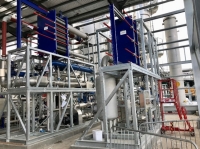
Tata Chemicals Europe invests in the United Kingdom's first CCU project
In an innovative application of CCU Technology, the TCE plant will capture carbon dioxide from the flue gasses of TCE’s gas-fired 400 MW steam combined heat and power (CHP) plant, which supplies steam and electricity to the company’s Northwich, England, operations and other industrial businesses in the area.
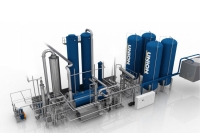
Coca-Cola CO2 Self-Sufficient, using Pentair's Self-Generating plant in Puerto Rico
In Puerto Rico, Caribbean, Union Engineering won a project from the local Coca-Cola bottler where the assignment was to ensure the bottler's independence from external carbon dioxide suppliers and secure a constant supply of top quality carbon dioxide. Further, the Coca-Cola bottler was facing increased difficulties in purchasing potassium permanganate from the market, a chemical traditionally used as an oxidation agent in the CO2 purification process.

Tanzanie Breweries becomes CO2 Self-Sufficient
At the Tanzania Brewery in Dar es Salaam, a member of the SABMiller Group, they produce both beer and soft drinks and have their own CO2 recovery plant for purifying the CO2 extracted from fermentation. However, due to the mix of several different products, an imbalance has occurred between the level of CO2 from the fermentation recovery and the actual need for CO2.
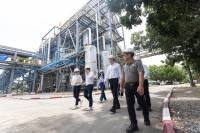
As part of their ethanol production process, TSM Group sought a way to capture and repurpose the CO2 emissions generated from molasses fermentation—a byproduct of sugar manufacturing. Their goal was to reduce greenhouse gas emissions and create a sustainable CO2 source for industrial use.
NEWS